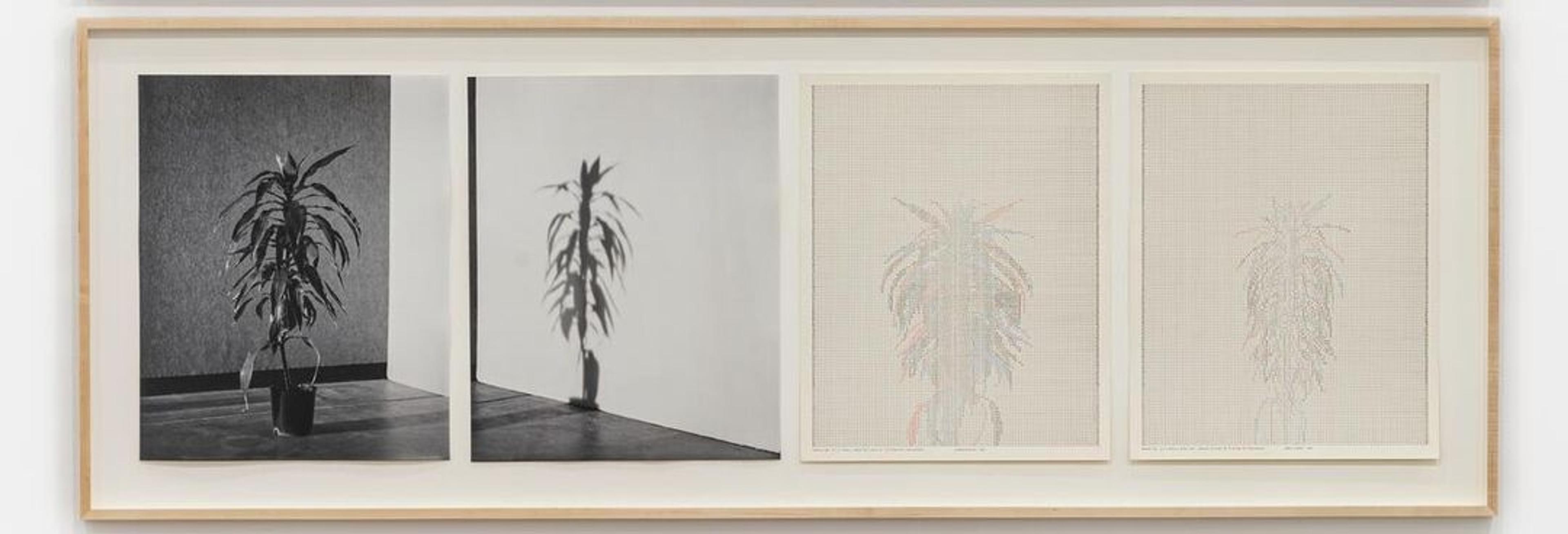
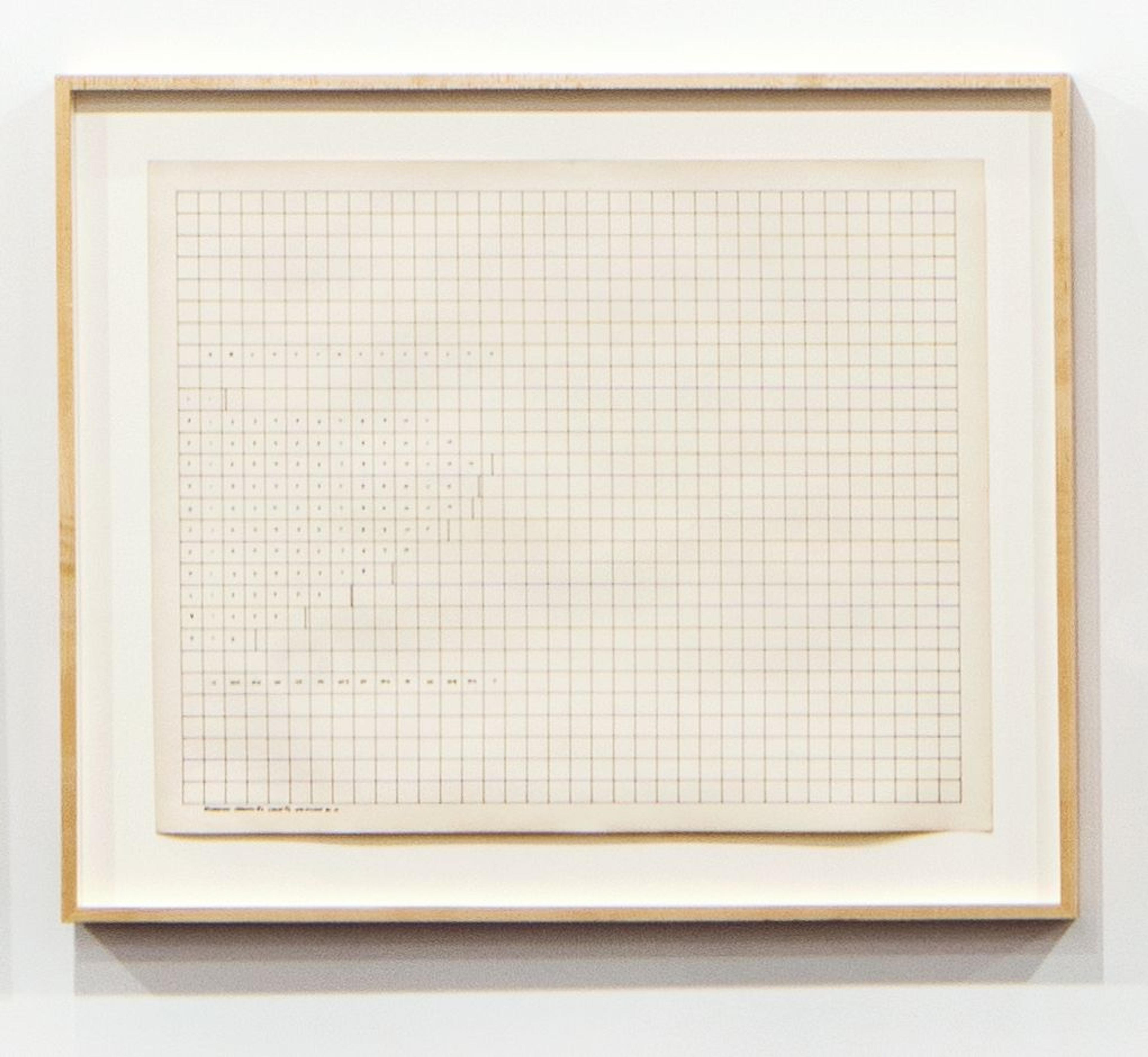
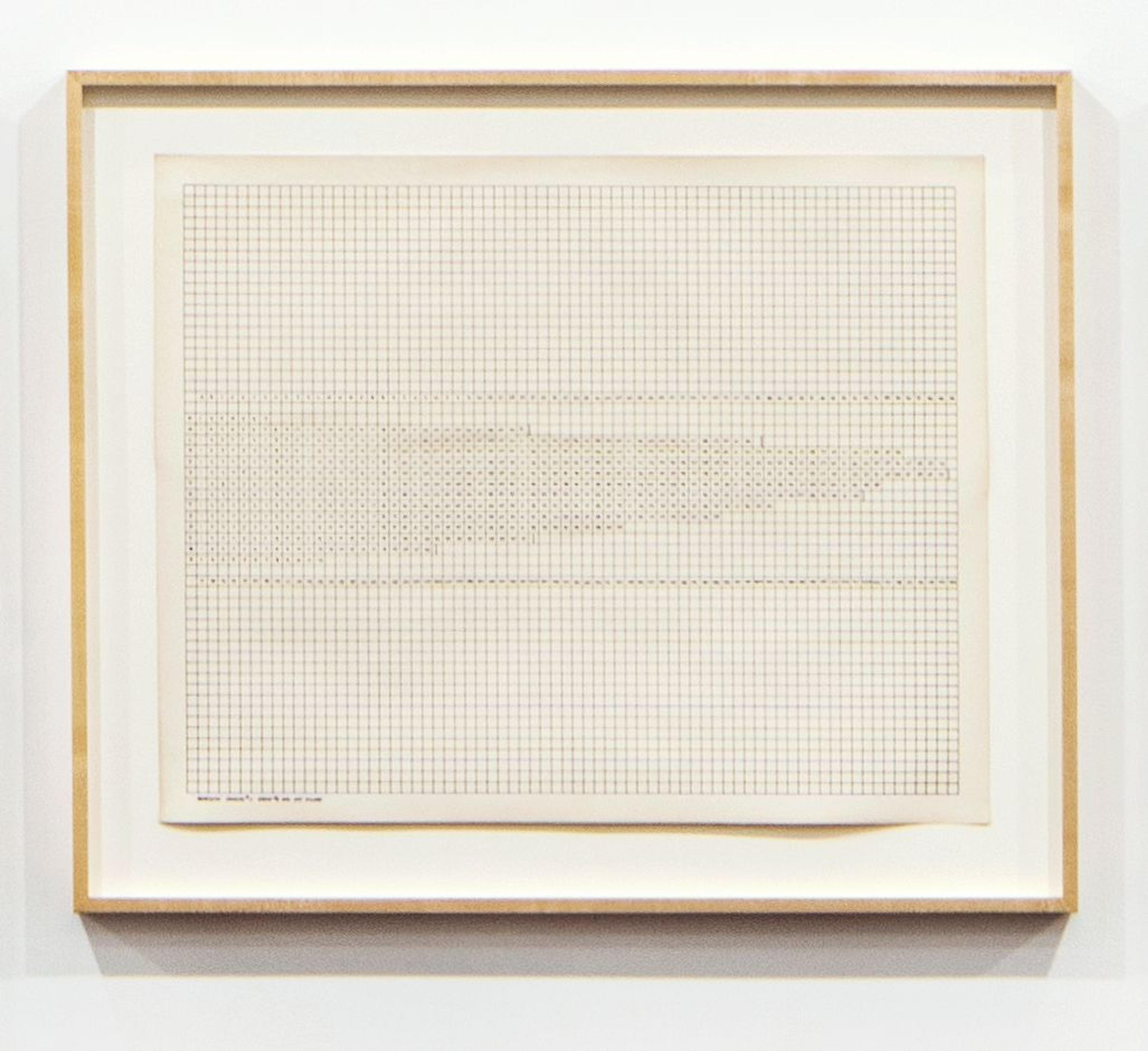
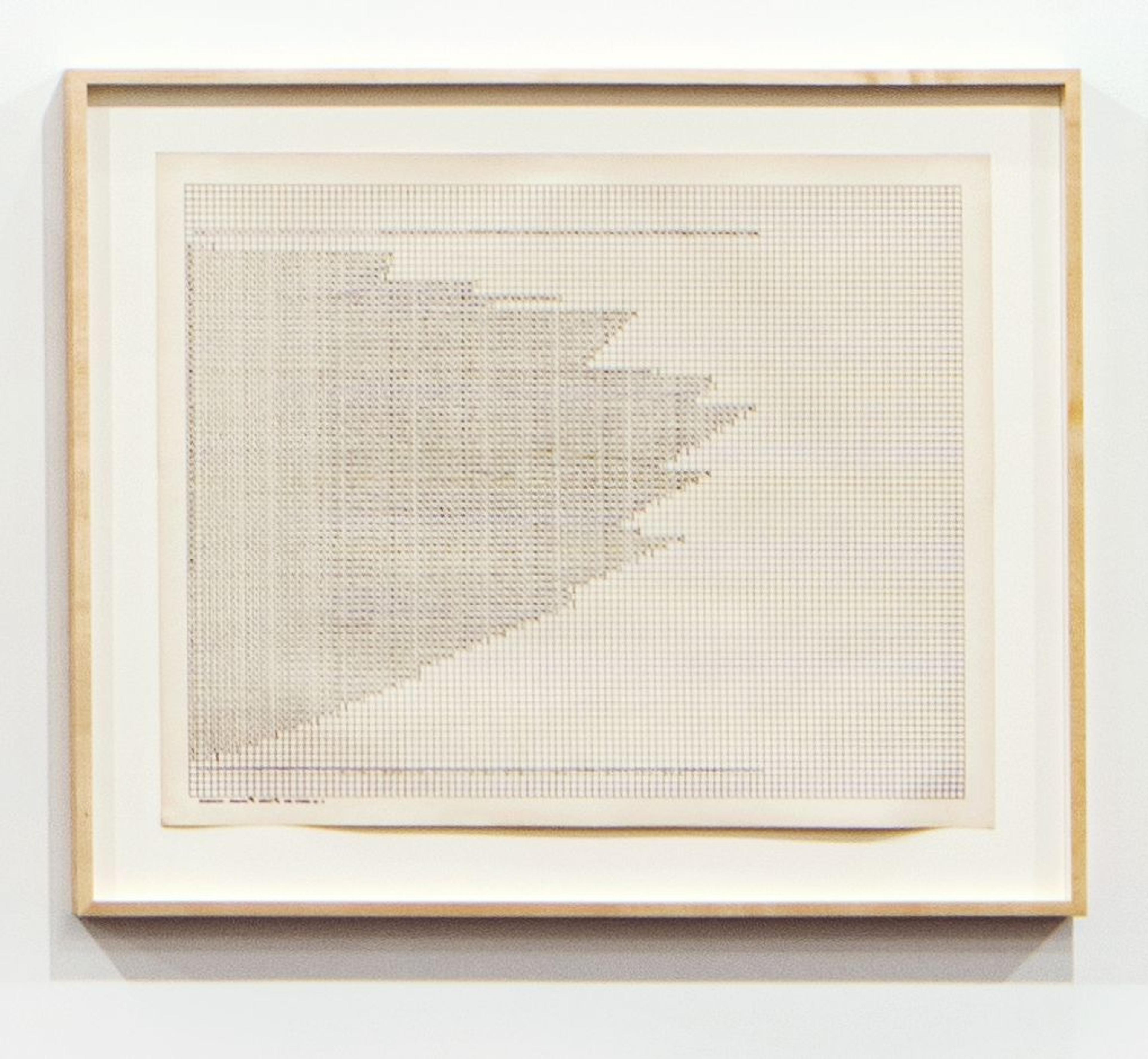
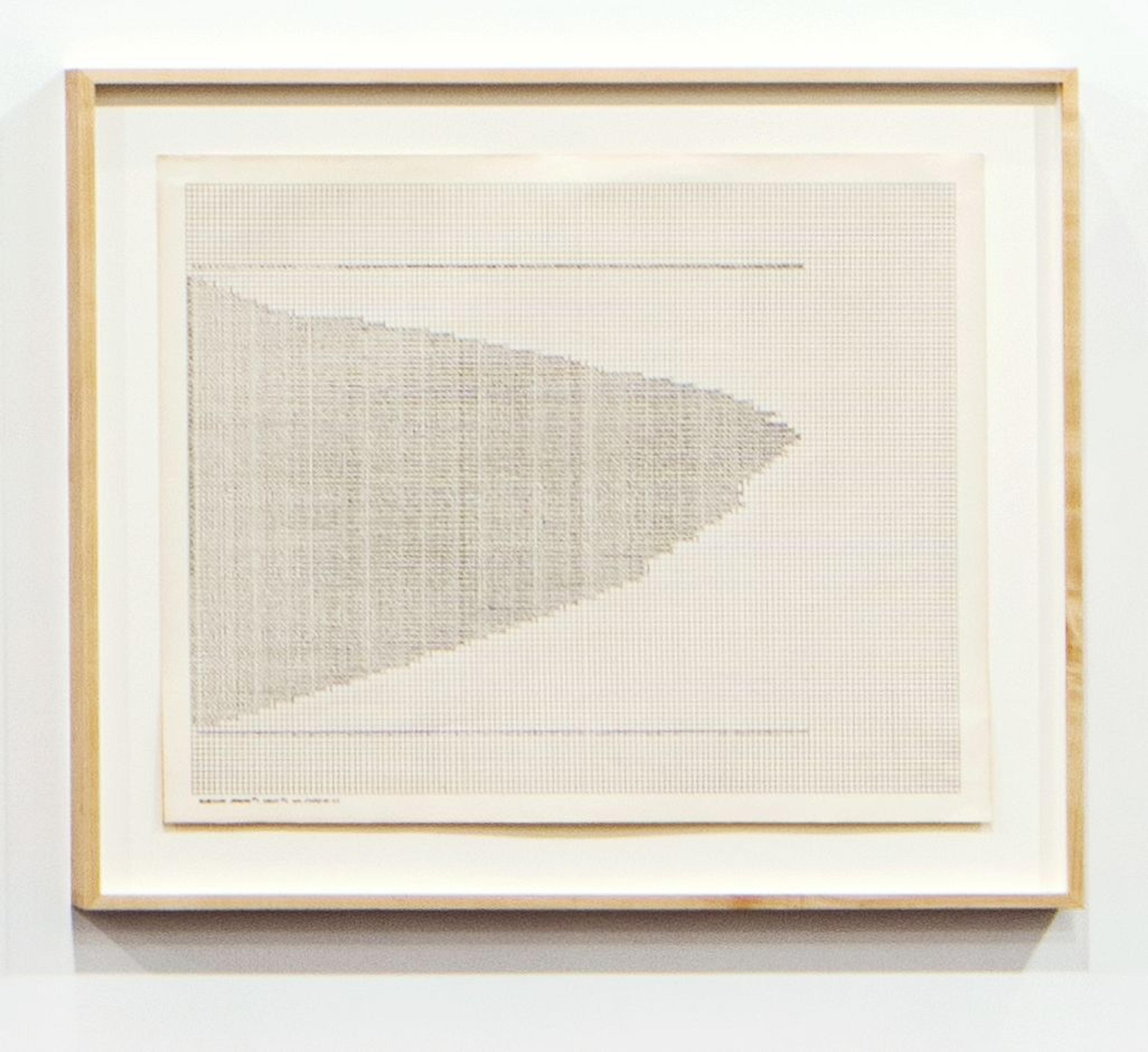
Charles GainesShadows IX, Set 1
Charles Gaines has been interrogating the way meaning is constructed through lyrical, system-based works since the 1970s. A key figure in the development of conceptual art, he analyzes, overlaps, and juxtaposes different structures of representation—mathematical, photographic, linguistic, and notational—in order to reveal both its limits and possibilities.
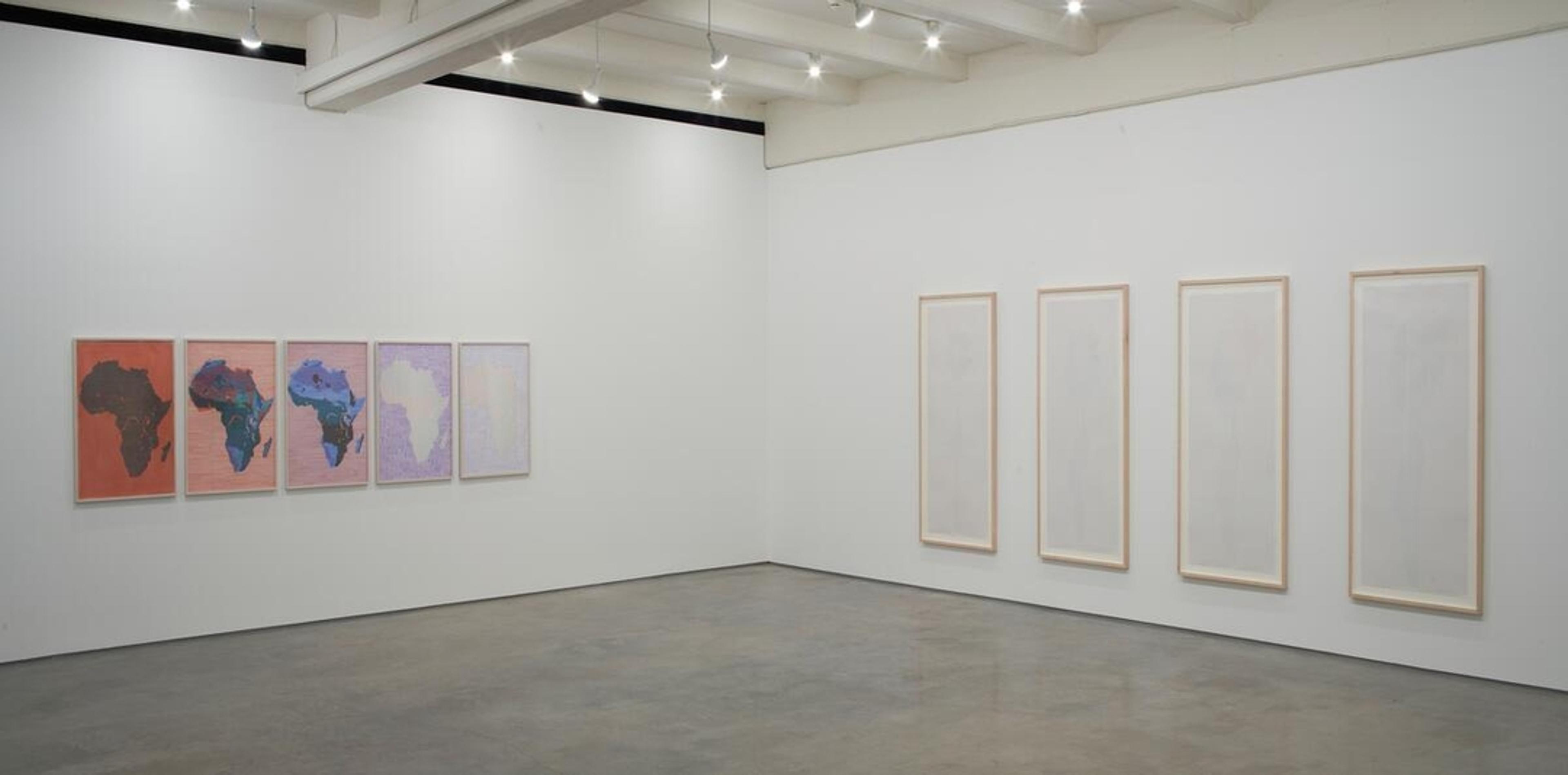
This focused grouping brings together works from the artist’s first series of mathematically determined drawings and early experiments transcribing photographs into numerical notations, alongside more recent investigations into how image, identity, and language are represented and deconstructed.
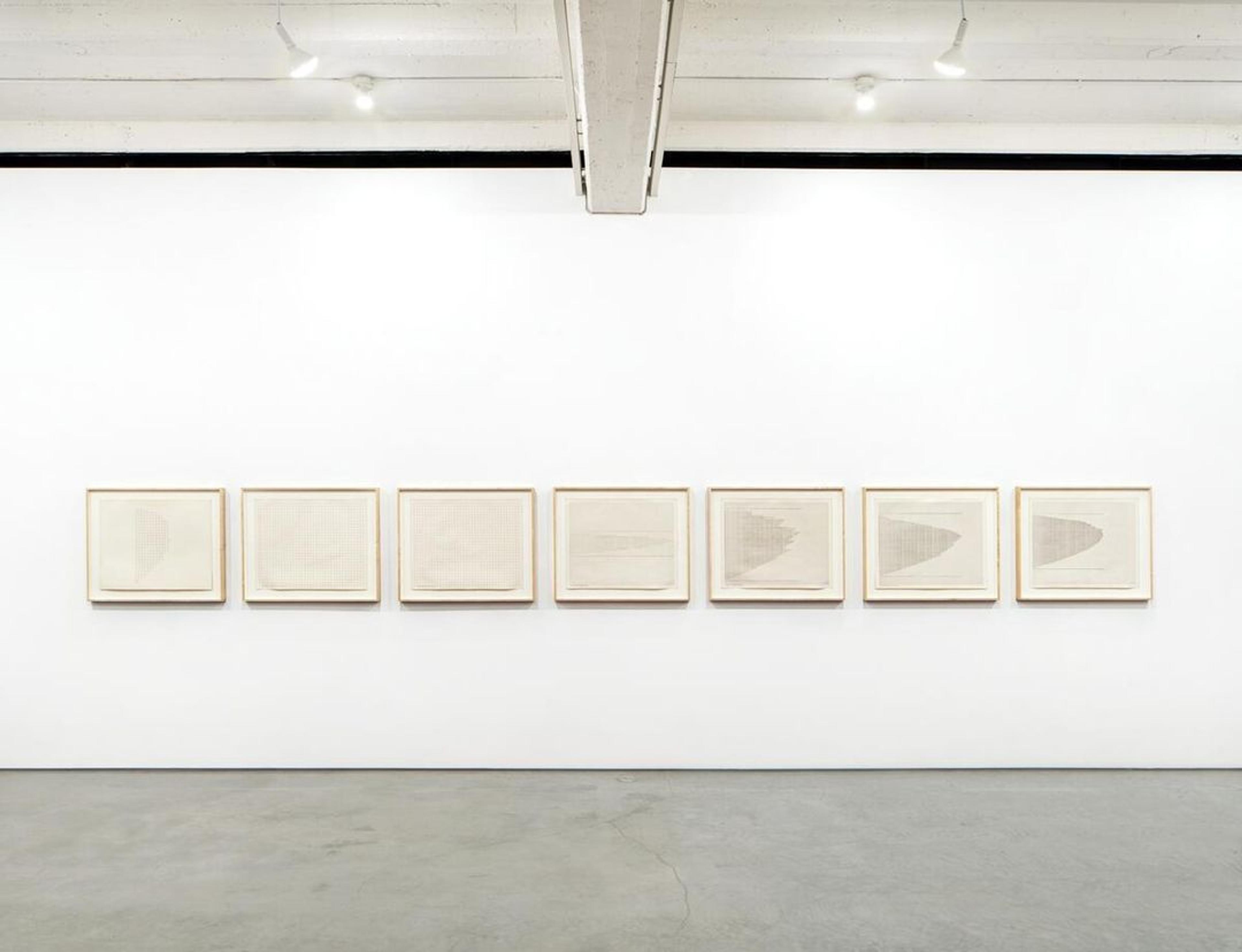
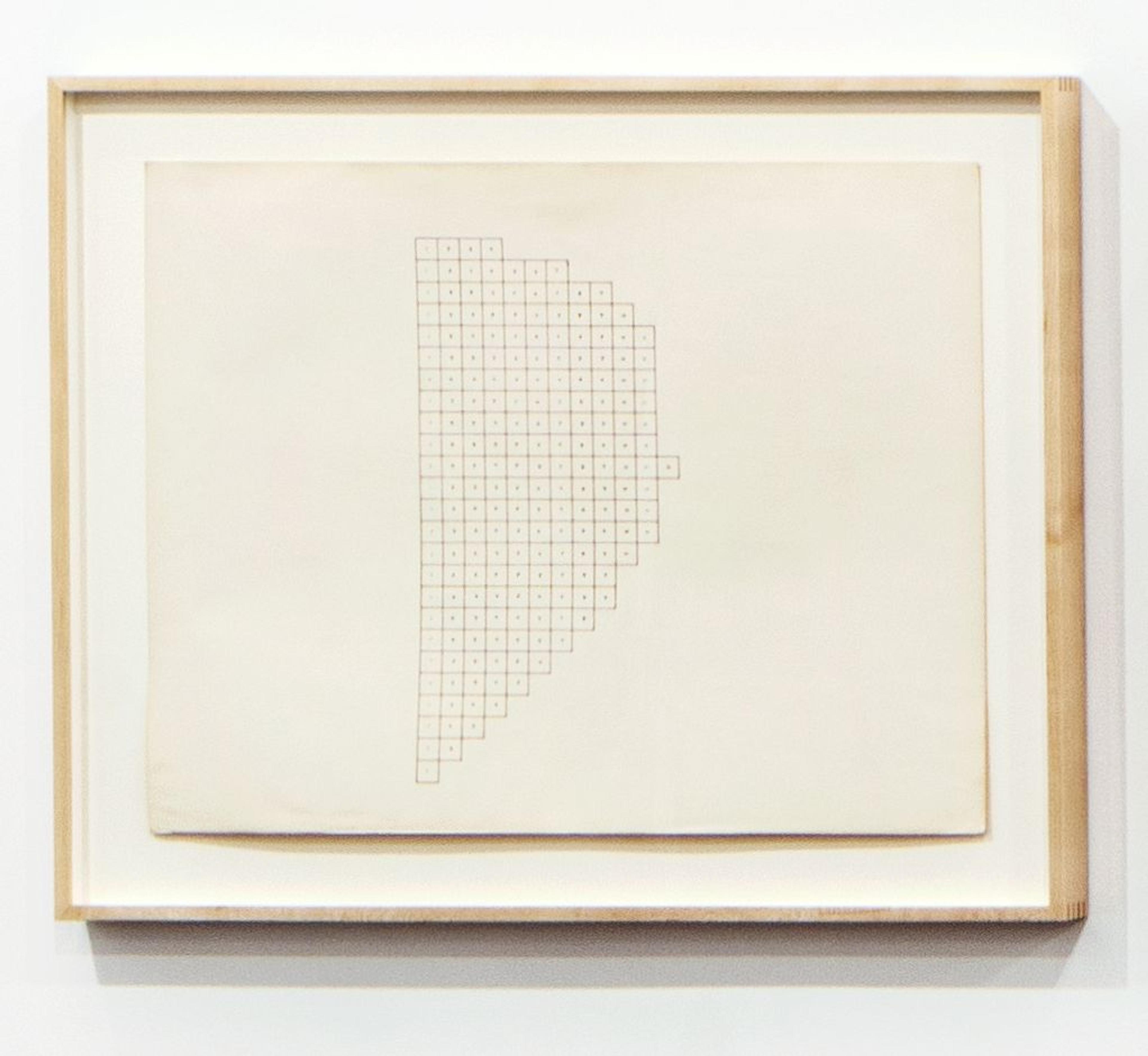
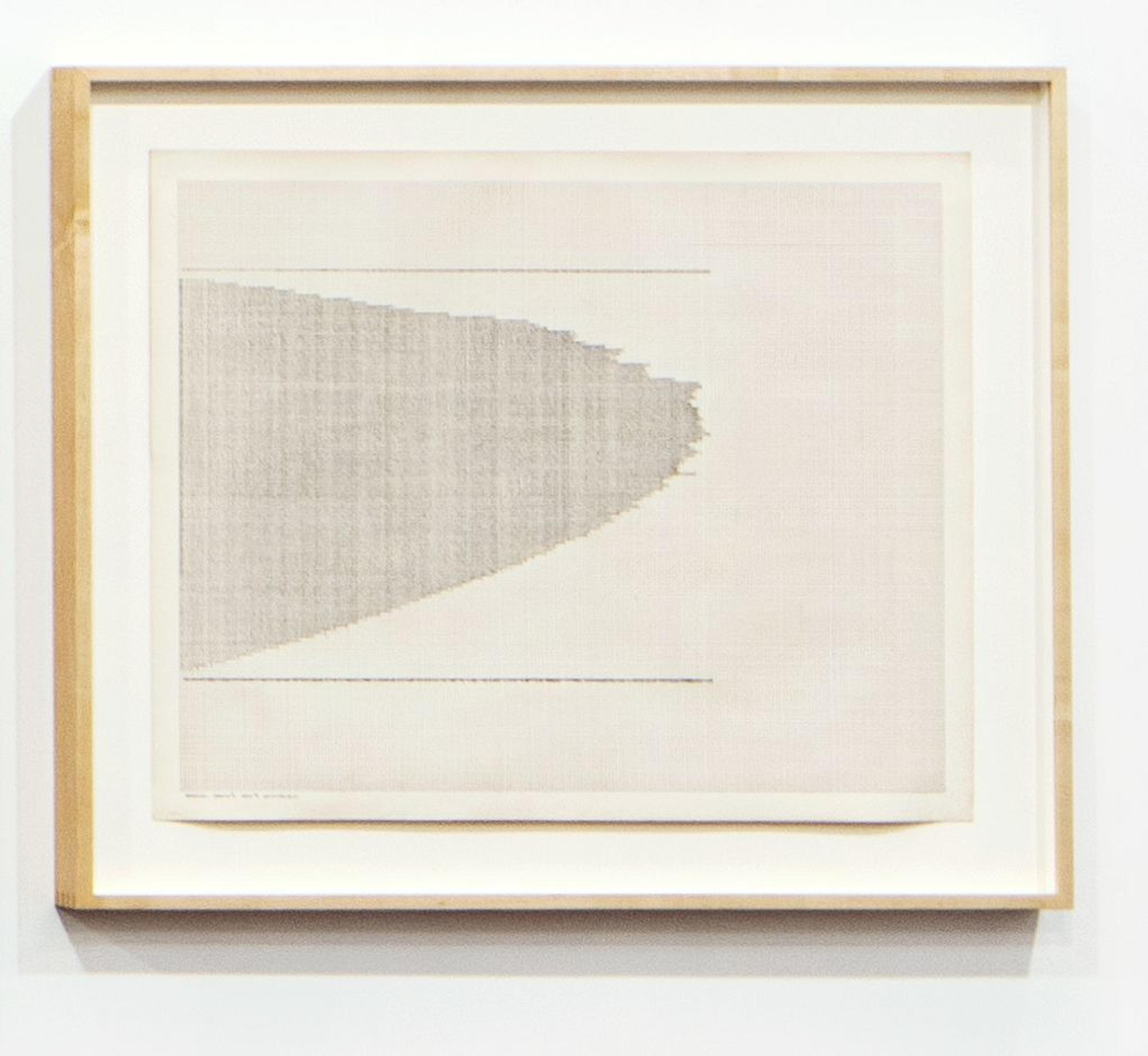
In the Regression series (1972–74), Gaines’s first grid works, each work consists of seven drawings determined by a mathematical formula the artist derived. The numbers in the first drawing of each set in the series are manipulated to produce those on the following drawing and so on in linear sequence.
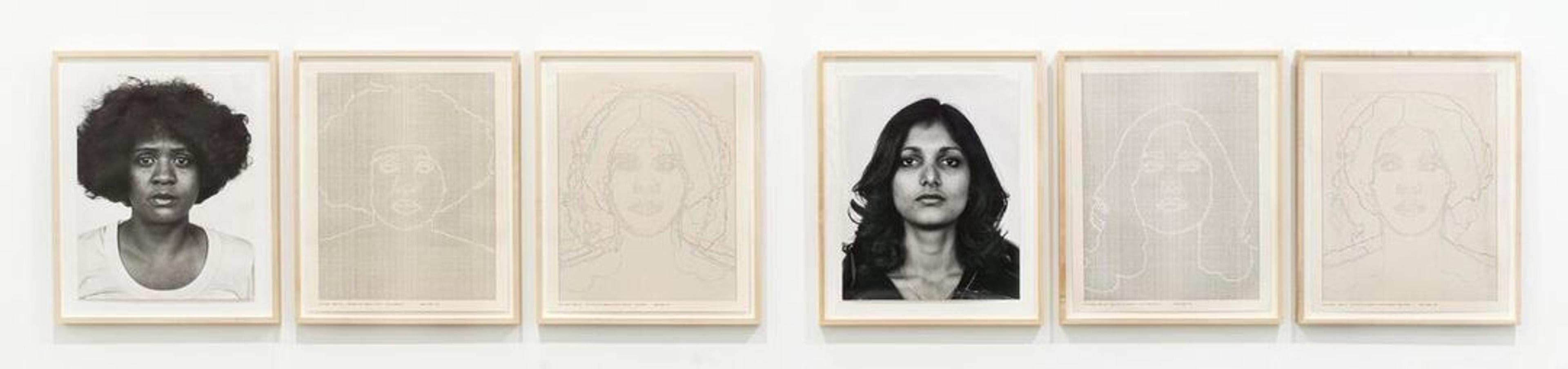
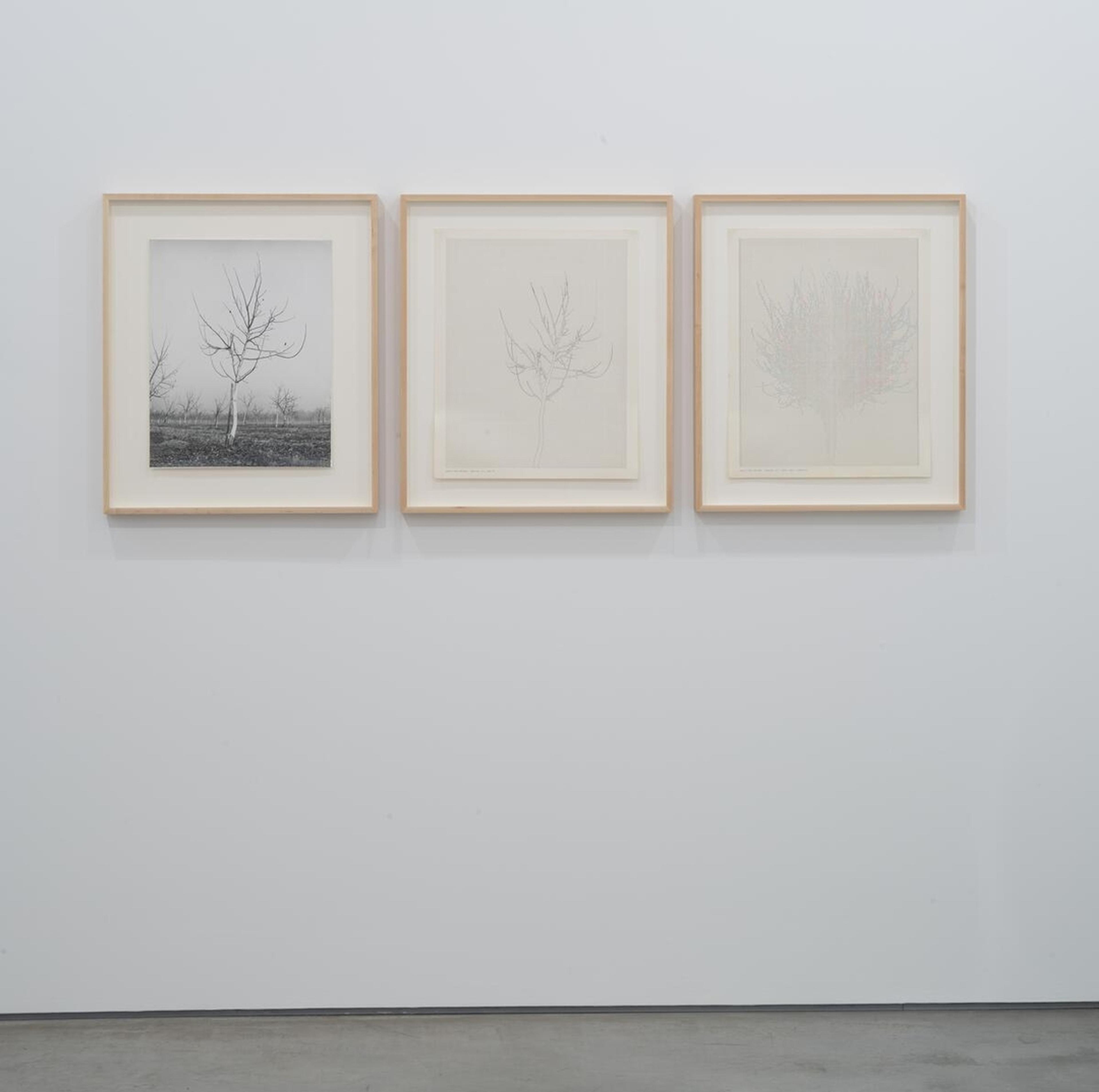
In the mid-1970s, Gaines began to incorporate photographic images into his practice. These early examples from his series Walnut Tree Orchard (1975–2014) and Faces (1978–79) illustrate how Gaines made photographs of plants and people and transcribed them into numbers and colors, which he then transposed onto grids. As he explains, “My interest in working with systems and processes was because I had existential questions that came out of my experience living in the Jim Crow South; questions like: who authorized this system?”[1]
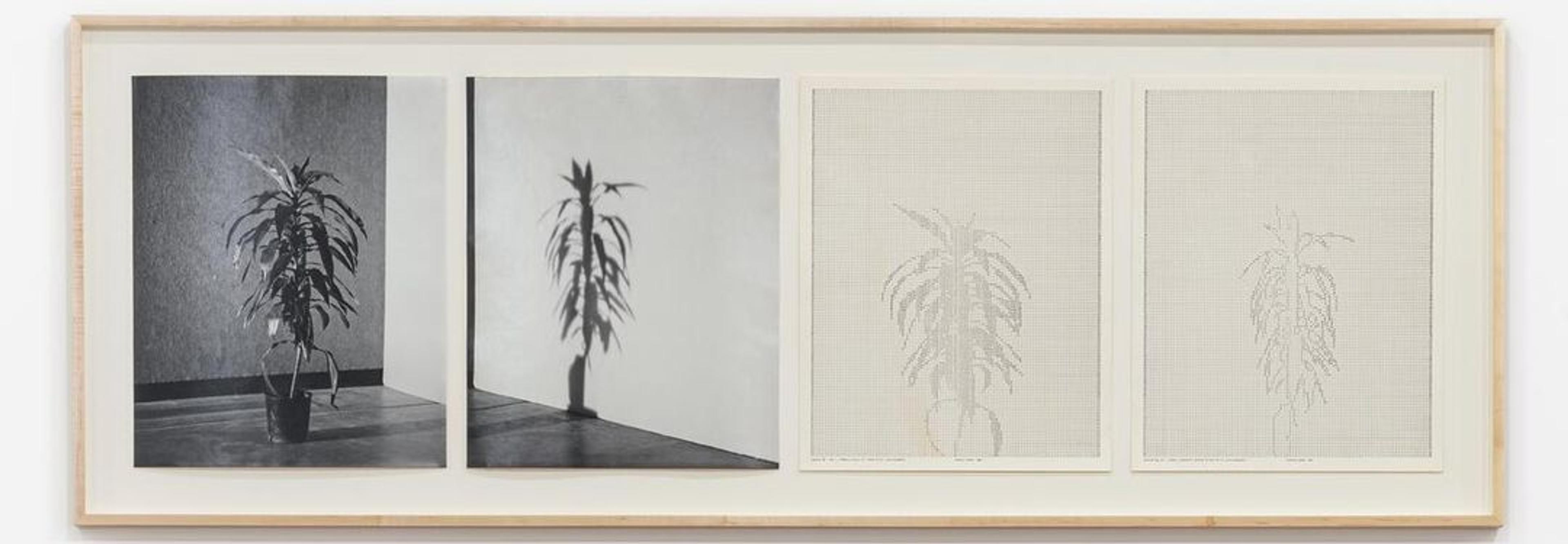
Gaines’s work in the late 1970s and early 1980s extended his serial processes to movement and negative space. In his Shadows series (1978–80), the artist choreographed rotating views of houseplants and their shadows. In these works, the technical precision and presumed objectivity of photographic or scientific documentation is called into question.
Excerpted from Charles Gaines, February 19, 2021–March 26, 2023, Dia Beacon; Exhibition Information.
Charles Gaines, quoted in Gregory Wessner, “Charles Gaines, New National Academician,” NAD NOW, November 10, 2020, https://www.nadnowjournal.org/in-conversation/charles-gaines-new-national-academician.
[1] Charles Gaines, quoted in Gregory Wessner, “Charles Gaines, New National Academician,” NAD NOW, November 10, 2020, https://www.nadnowjournal.org/in-conversation/charles-gaines-new-national-academician.
1-2 years
11
20th Century
Dia Art Foundation