Kenneth NolandMysteries: Red Light
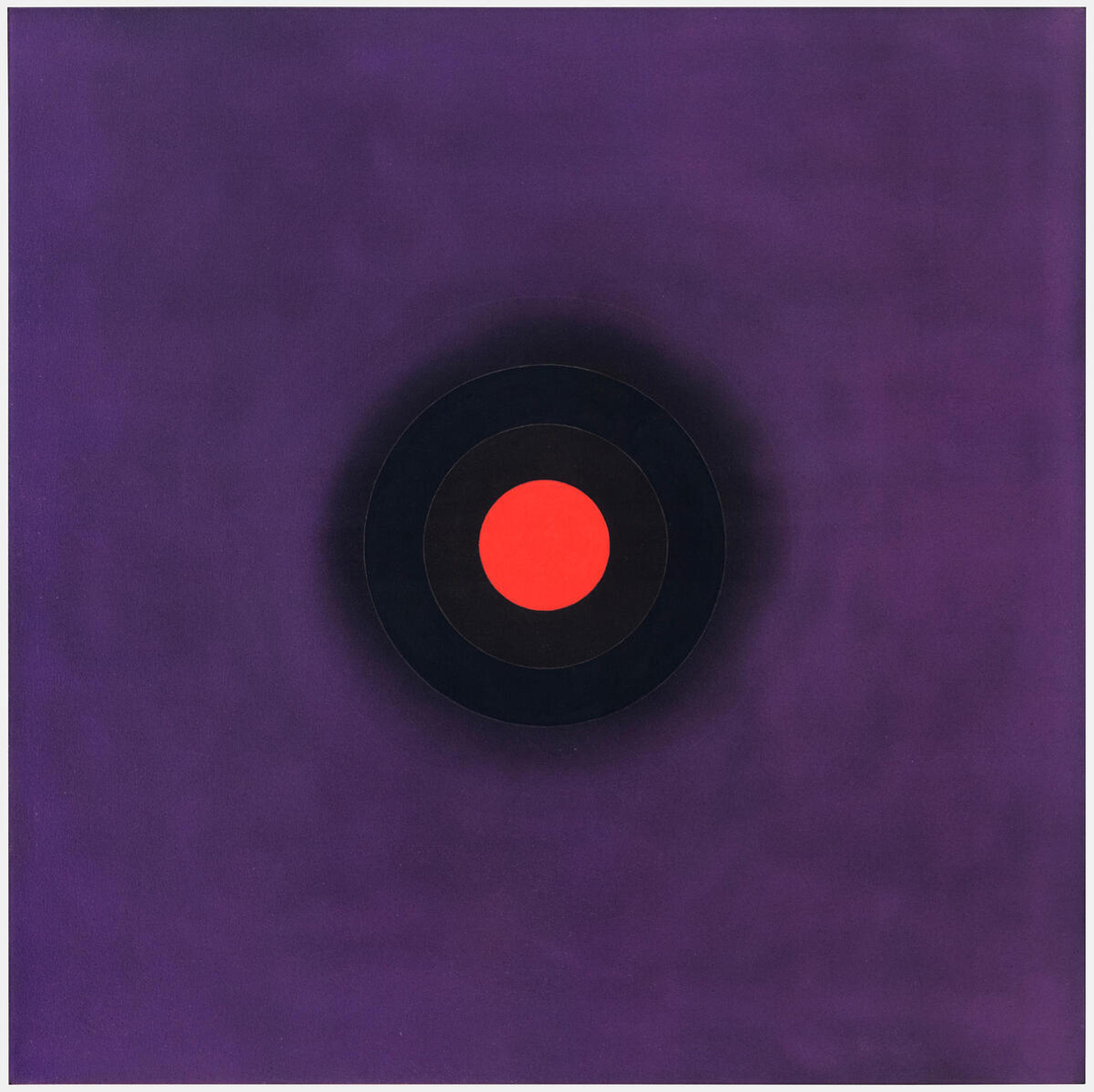
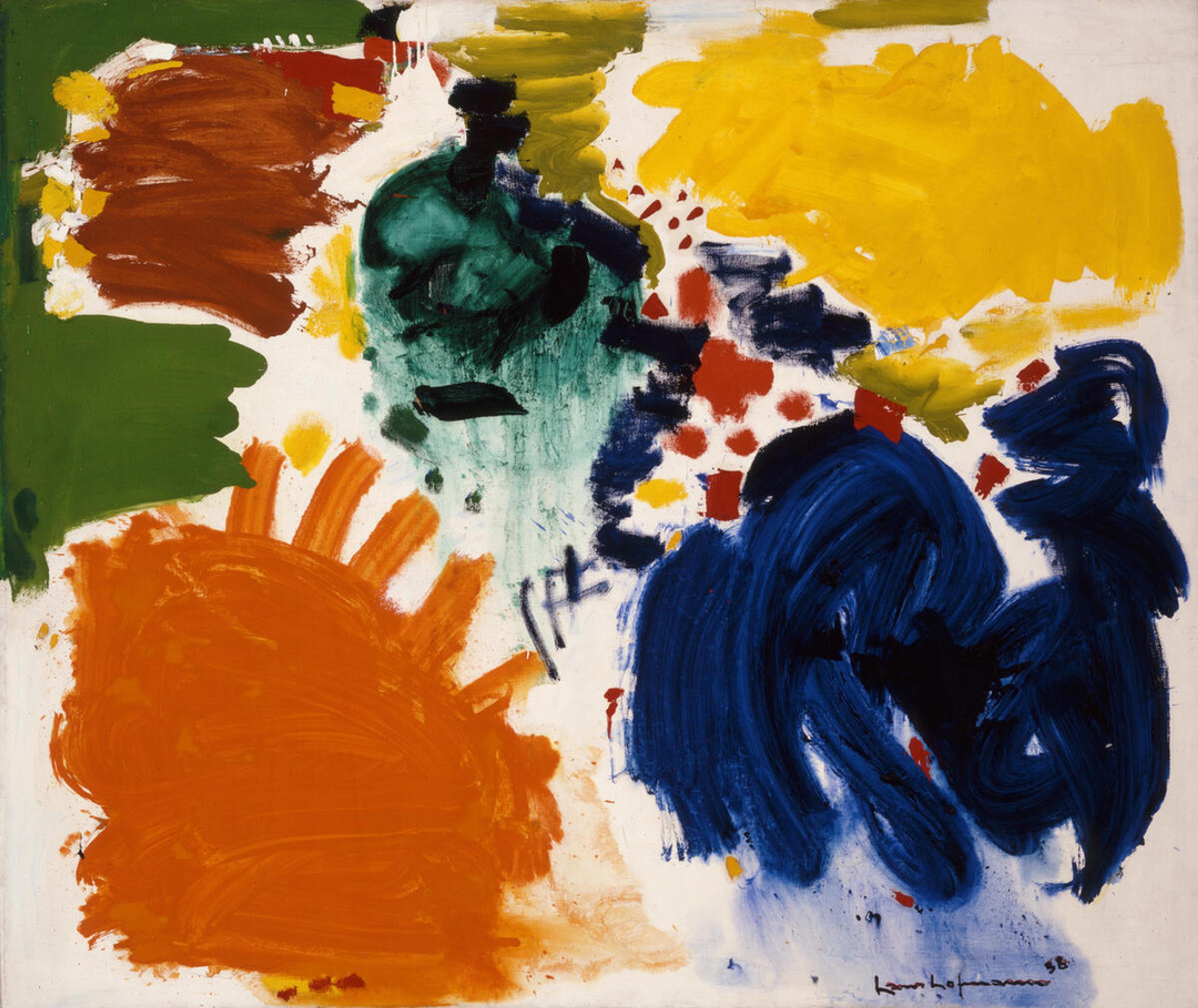
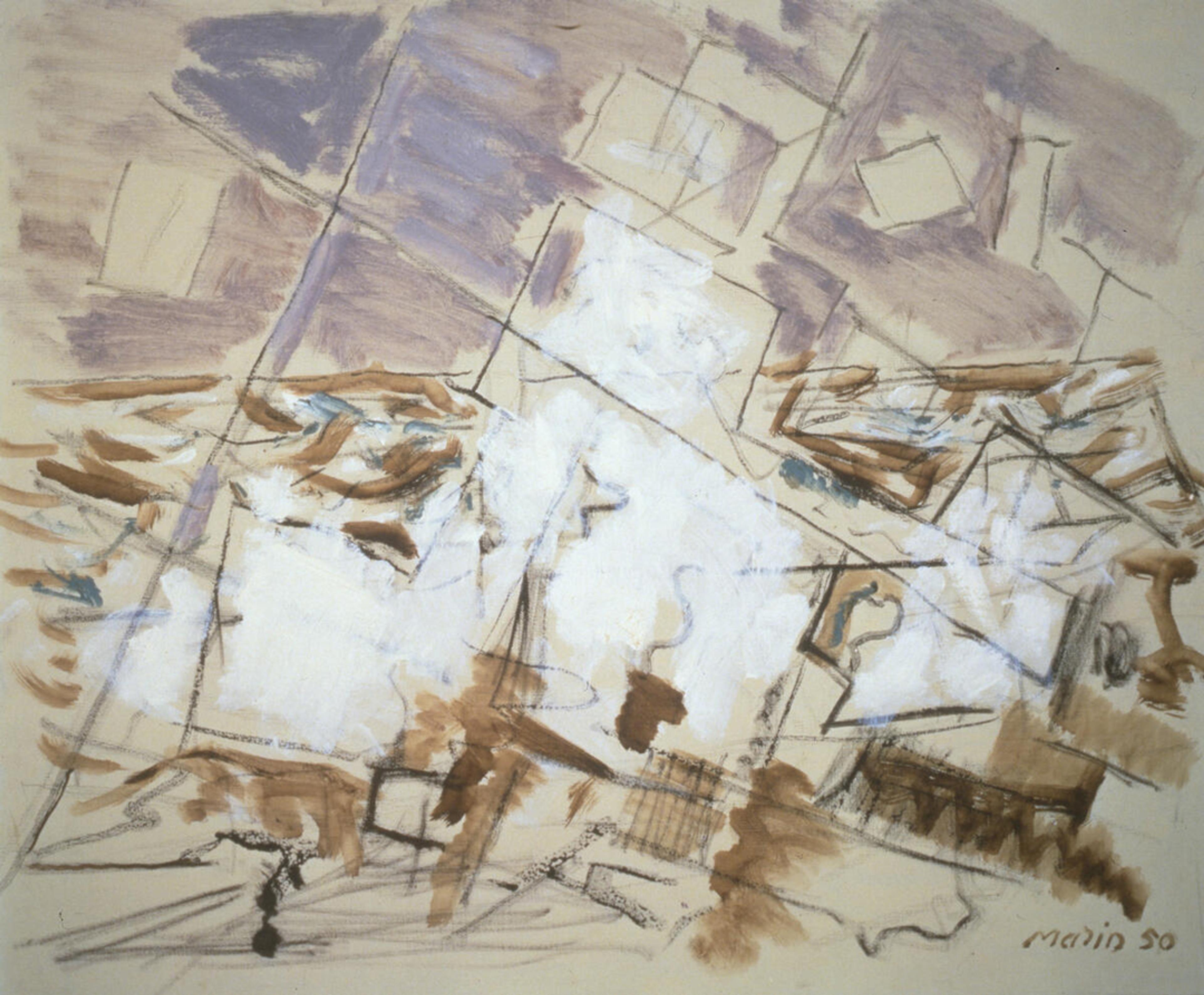
This grouping succinctly tracks decades’ worth of explorations around painterly abstraction in America. By 1950, the work of John Marin—regarded by influential critics like Clement Greenberg as the best painter of his generation—had become a clear link between the modernist trends of the 1920s and the emerging Abstract Expressionist movement. This crucial relation is visible in the artist's 1950 canvas Movement in White, Umber, and Cobalt Green and is confirmed by Alfred Barr’s decision to feature him in that year’s Venice Biennial. Hans Hoffman’s Rising Sun was painted during his last decade and furthered his cardinal mission of avoiding any single defining style. Painted contemporaneously to starkly different geometric canvases, this work features large swaths of color, gestural brushwork, and areas of thinly soaked oils. Also painted during the later years of his career, Kenneth Noland’s 1999 Mysteries of Light represented a return to the circular motif that had defined the artist’s career since the 1958 work Globe. As the title suggests, the connection between form and color creates a dynamic relationship between foreground, middle ground, background, and support.
1 - 2 years
Oct. 2027 - Oct. 2030
3
20th Century
Kemper Museum of Contemporary Art
Artworks can be hung together or dispersed throughout the galleries.
Art Bridges covers all costs to prepare and ship the artworks to the borrowing museums. The foundation encourages borrowing museums to apply for accompanying Learning & Engagement funding to support the activation and interpretation of Partner Loan Networks artworks. Learning & Engagement funding supports multidisciplinary programming, interpretive materials, and community outreach.