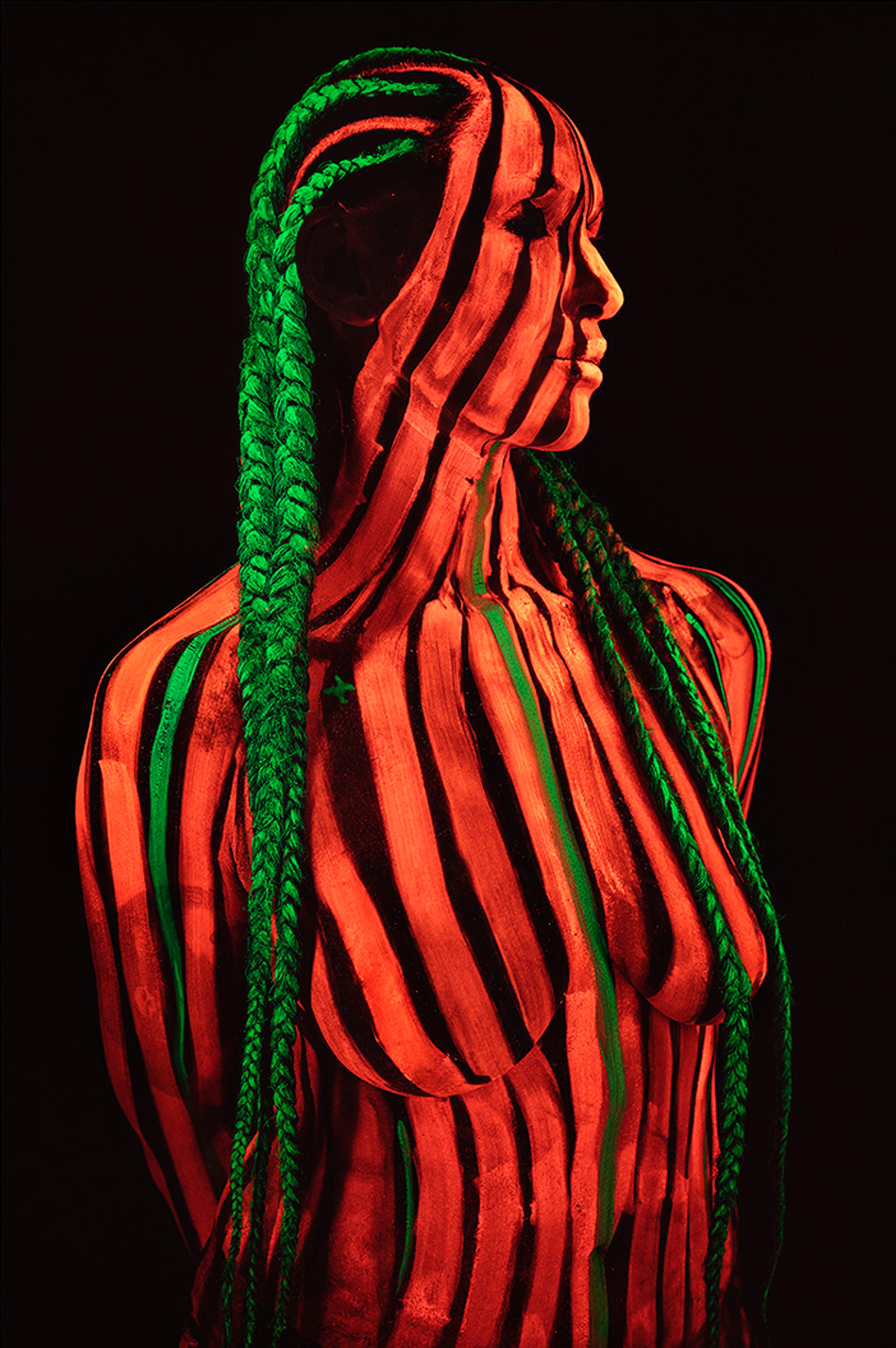
Jaune Quick-to-See-SmithPlayground
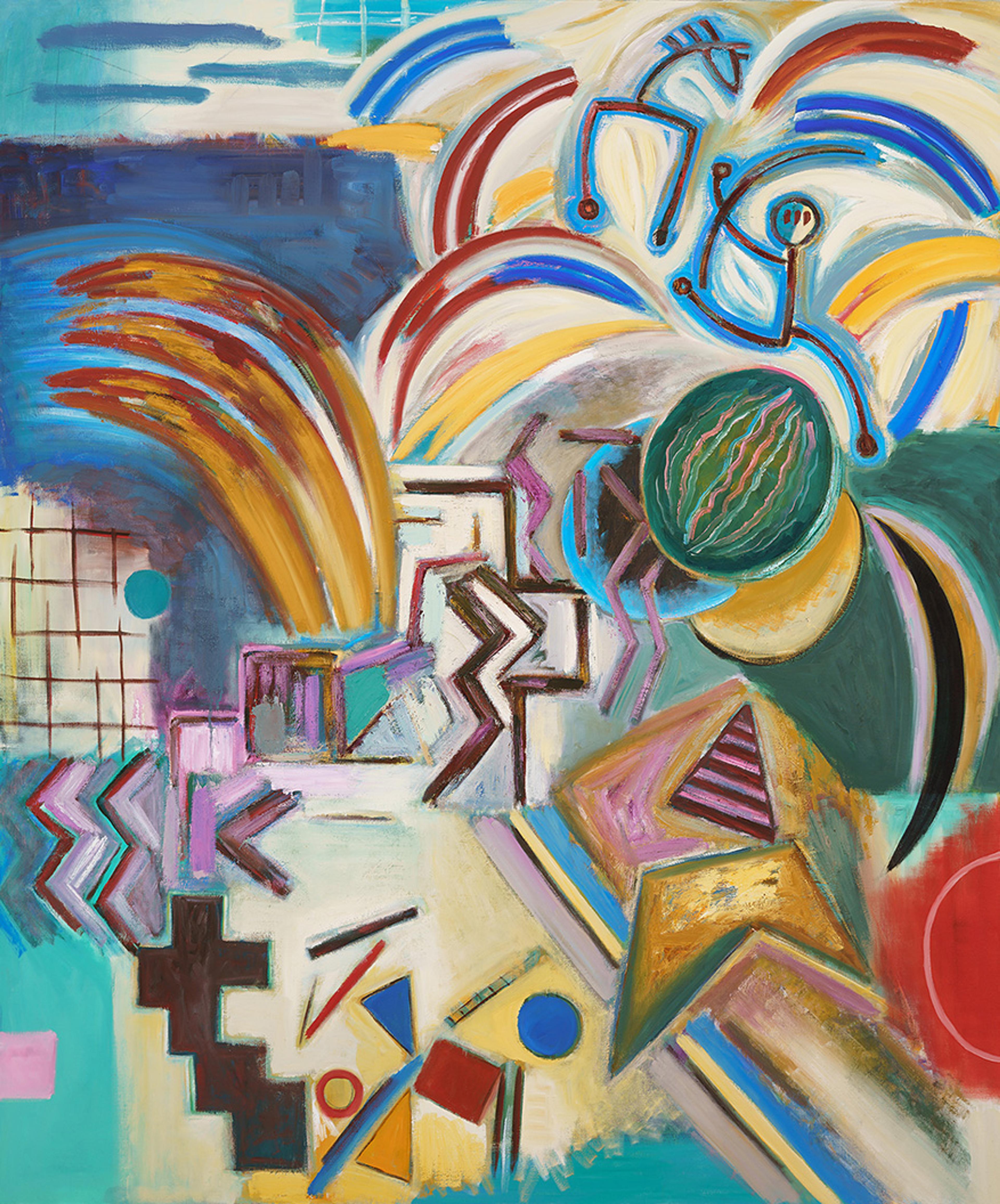
In the early 19th century, the Kwakwa̱ka̱’wakw people of the North Pacific Coast started to incorporate European trade materials into tunicsworn during potlatch ceremonies. These tunics, illustrated here in Marianne Nicolson’s mixed-media painting, incorporate crest and clan designs that demonstrate familial lineages and the passing of specific privileges, such as land rights. The design of the Double-Headed Thunderbird in this particular tunic refers to the land rights of the Kwikwasut'inuxw Nation, one of the Indigenous communities Nicolson belongs to. After the colonial Canadian government outlawed Indigenous ceremonies in the 1920s, these tunics were not used for many decades. In the 1990s, however, young men began refilling positions in the potlatch ceremony and sought new tunics. This led to their resurgence as a cultural clothing item. The title, Tunics of the Changing Tides, refers to the cycle of return of Kwakwa̱ka̱’wakw cultural freedom and the expression of their worldview through the tunics a century after their legal suppression.
Marianne Nicolson
57 x 63 in.
Art Bridges
2007
Wood, acrylic, brass, copper, abalone shell, and silver inlay on wood
AB.2025.41
Pending