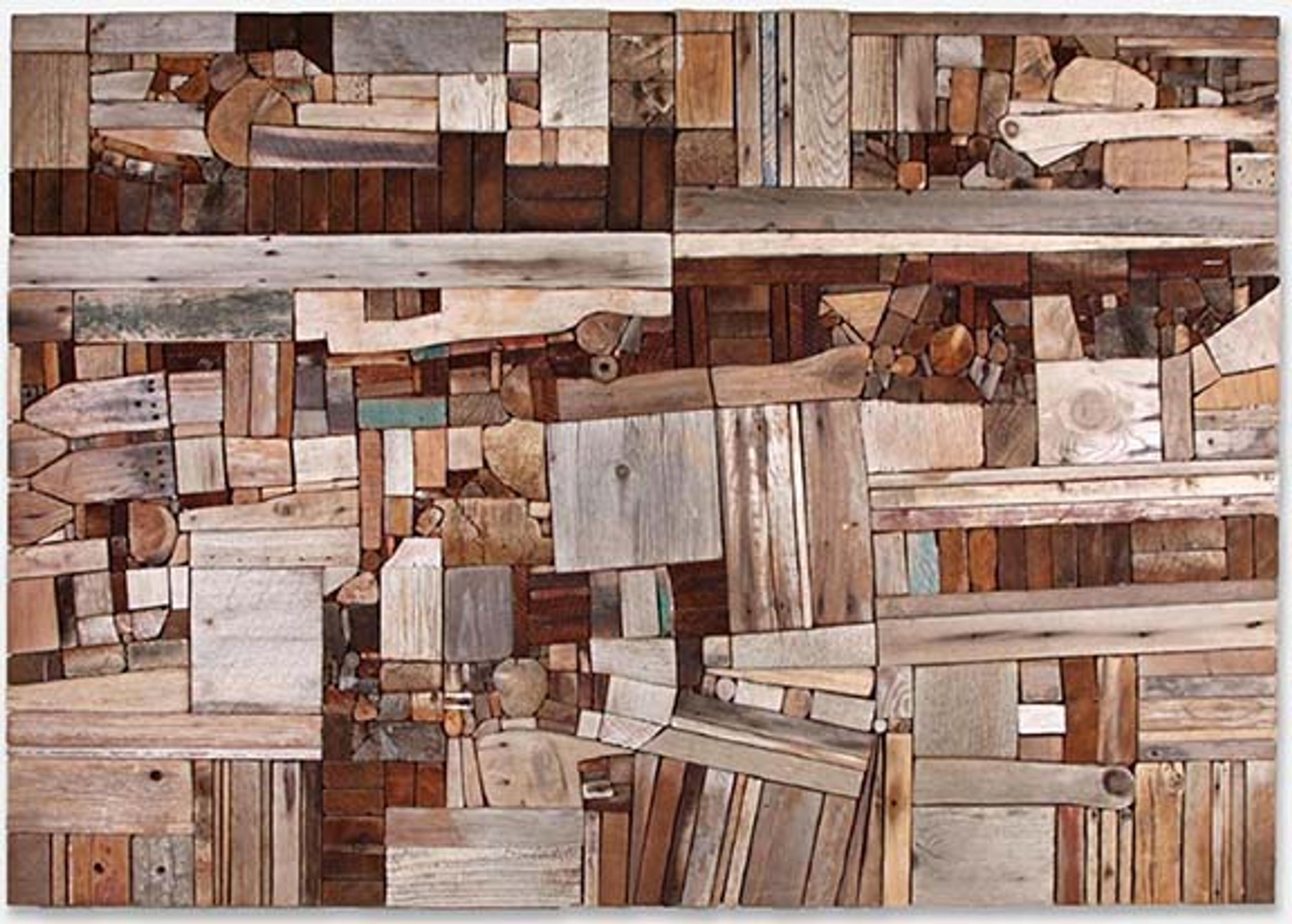
George MorrisonCollage X Landscape
After completing a Fulbright fellowship in France, Ojibwe artist George Morrison frequently traveled between his home state of Minnesota and New York City, where he settled in 1954. Traversal marks a transition in Morrison’s practice from small-scale cubist drawings to large-scale paintings. Exposed to the booming Abstract Expressionist movement in mid-1950s New York, Morrison began to incorporate energetic movement into his paintings, which he created in one take. In Traversal, his large, gestural brushstrokes build bold blocks of color that traverse one another. Traversal is emblematic of the action painting that emerged during this period of Abstract Expressionism, when artists—including Morrison—prioritized process over content and gesture over subject.
After completing a Fulbright fellowship in France, Ojibwe artist George Morrison frequently traveled between his home state of Minnesota and New York City, where he settled in 1954. This itinerant lifestyle allowed him to not only experiment with his artistic practice but also befriend and exhibit with major American artists like Willem de Kooning and Jackson Pollock. His expressionistic painting Traversal is a reflection of his physical and artistic journies. Using dynamic brushstrokes and bold colors, Morrison transformed his experiences into a moving visual story.
George Morrison
25 x 46 3/4 in.
Art Bridges
1958
Oil on canvas
AB.2025.36
Pending