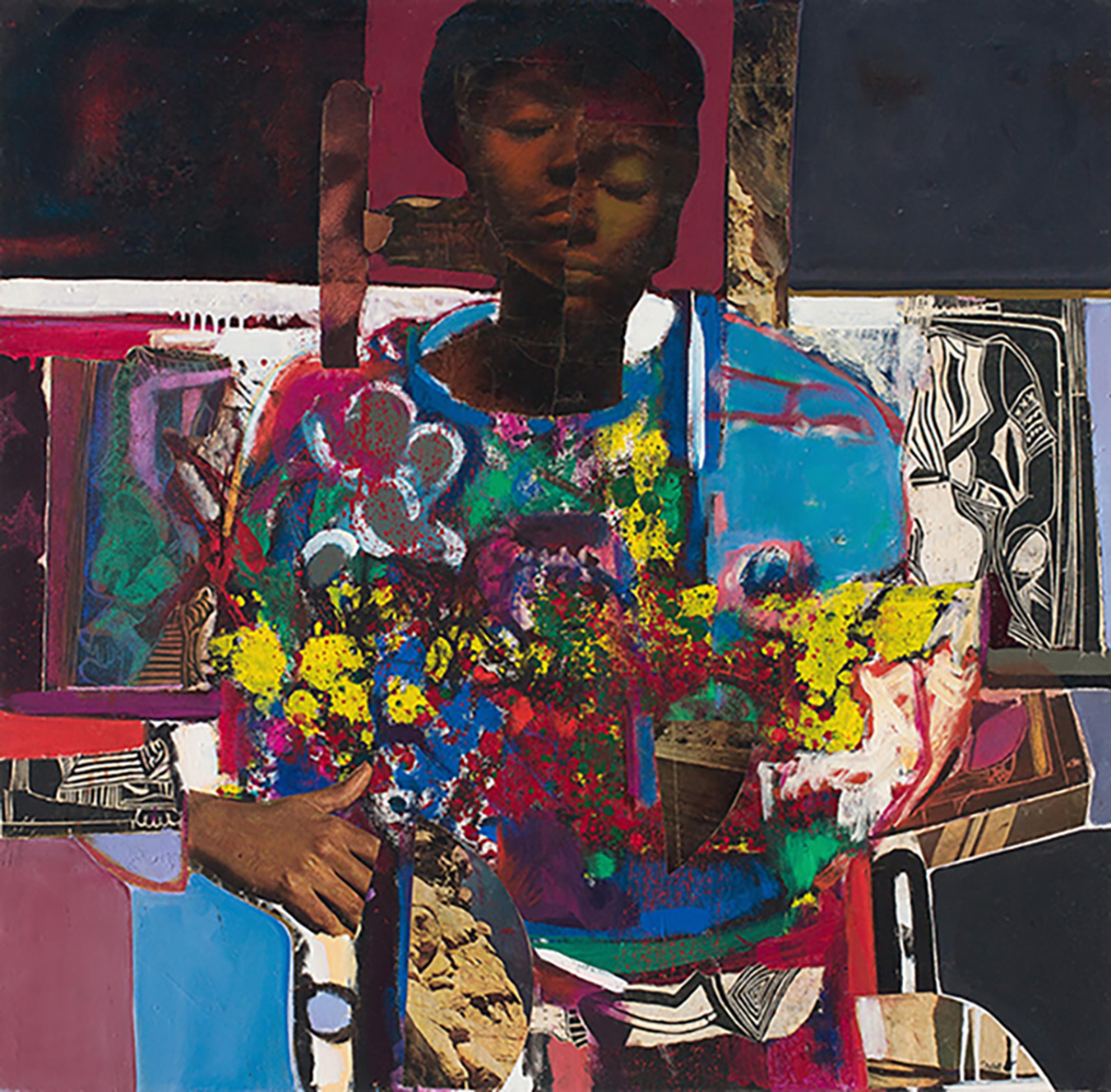
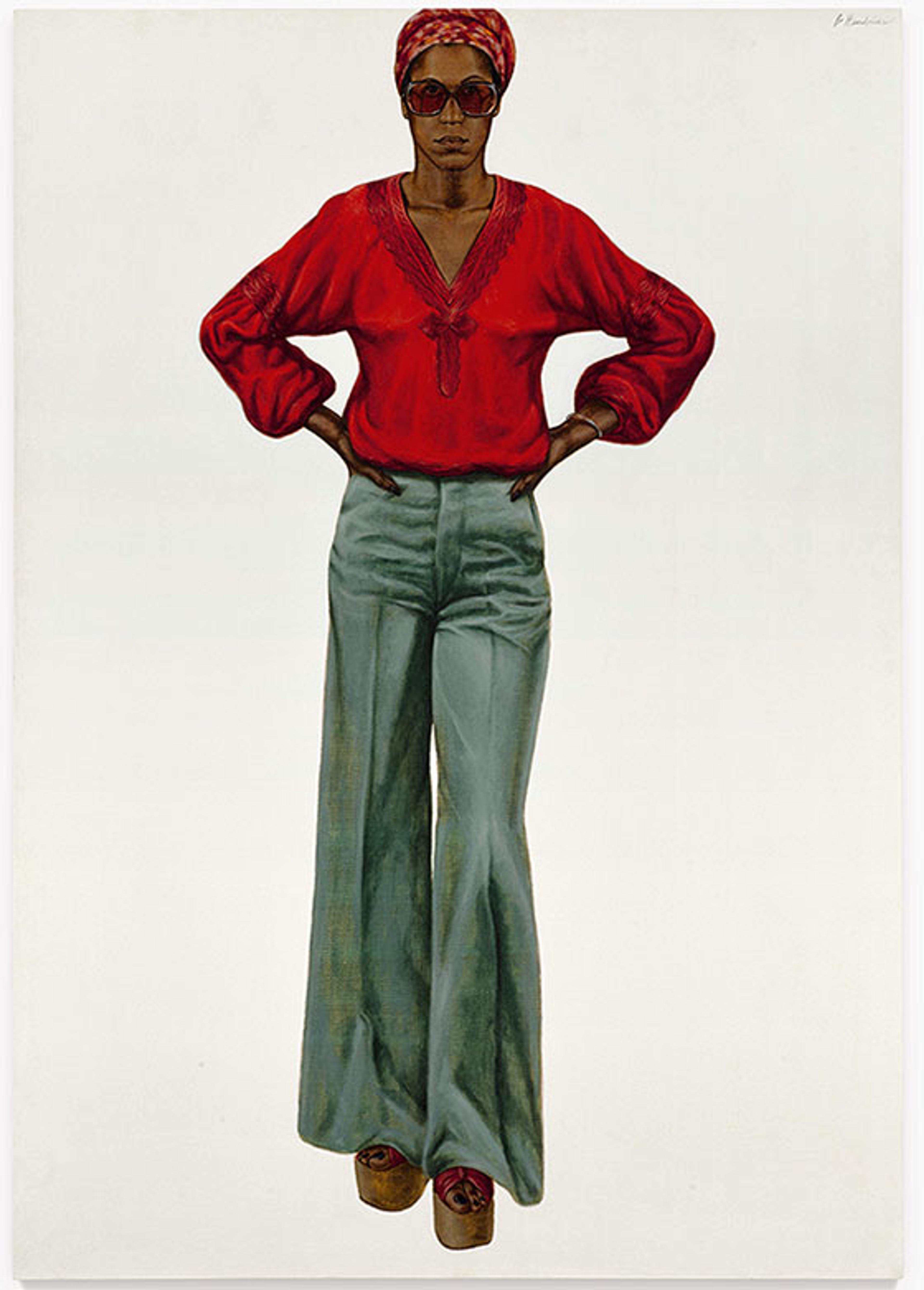
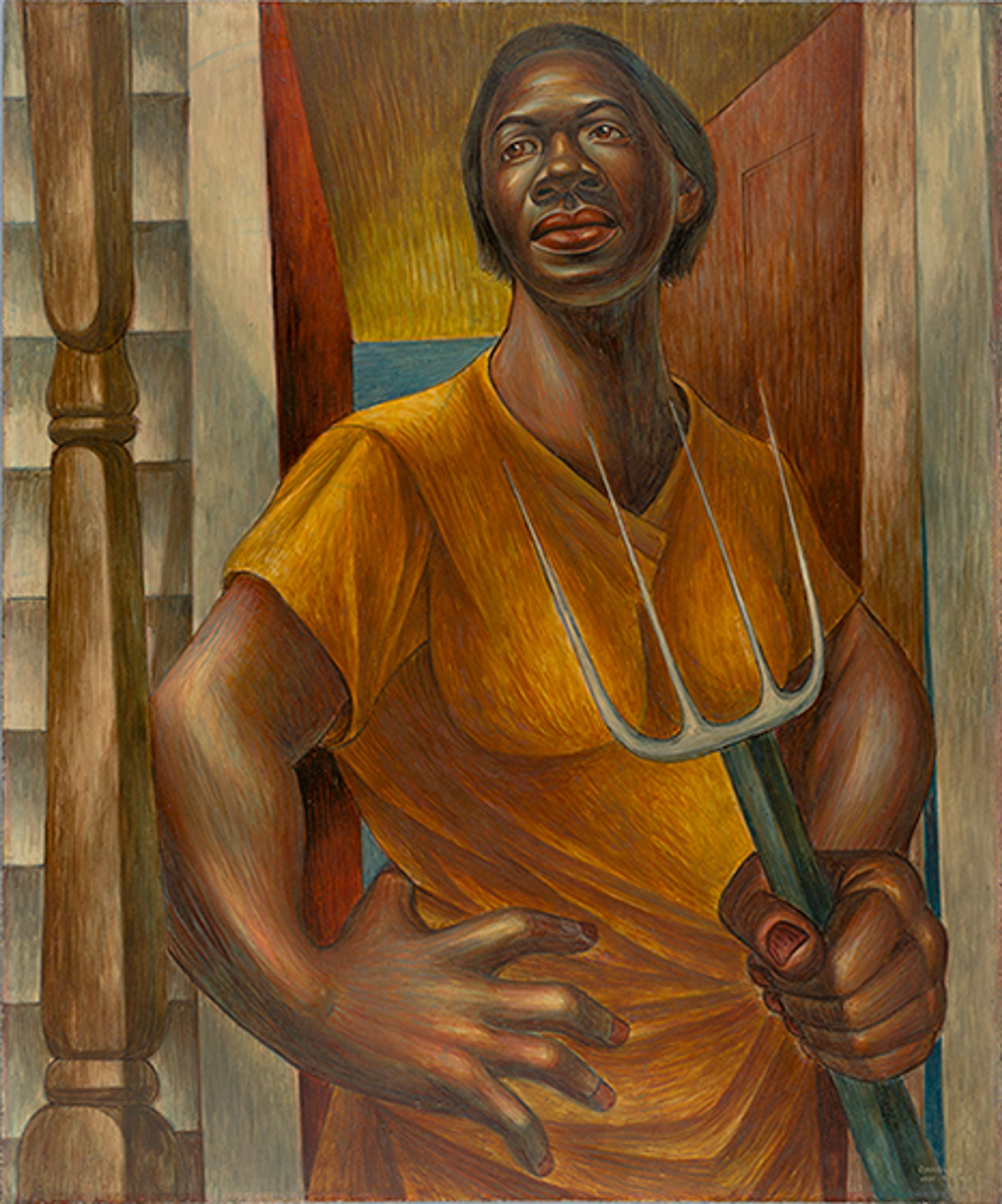
Charles Wilbert WhiteOur Land
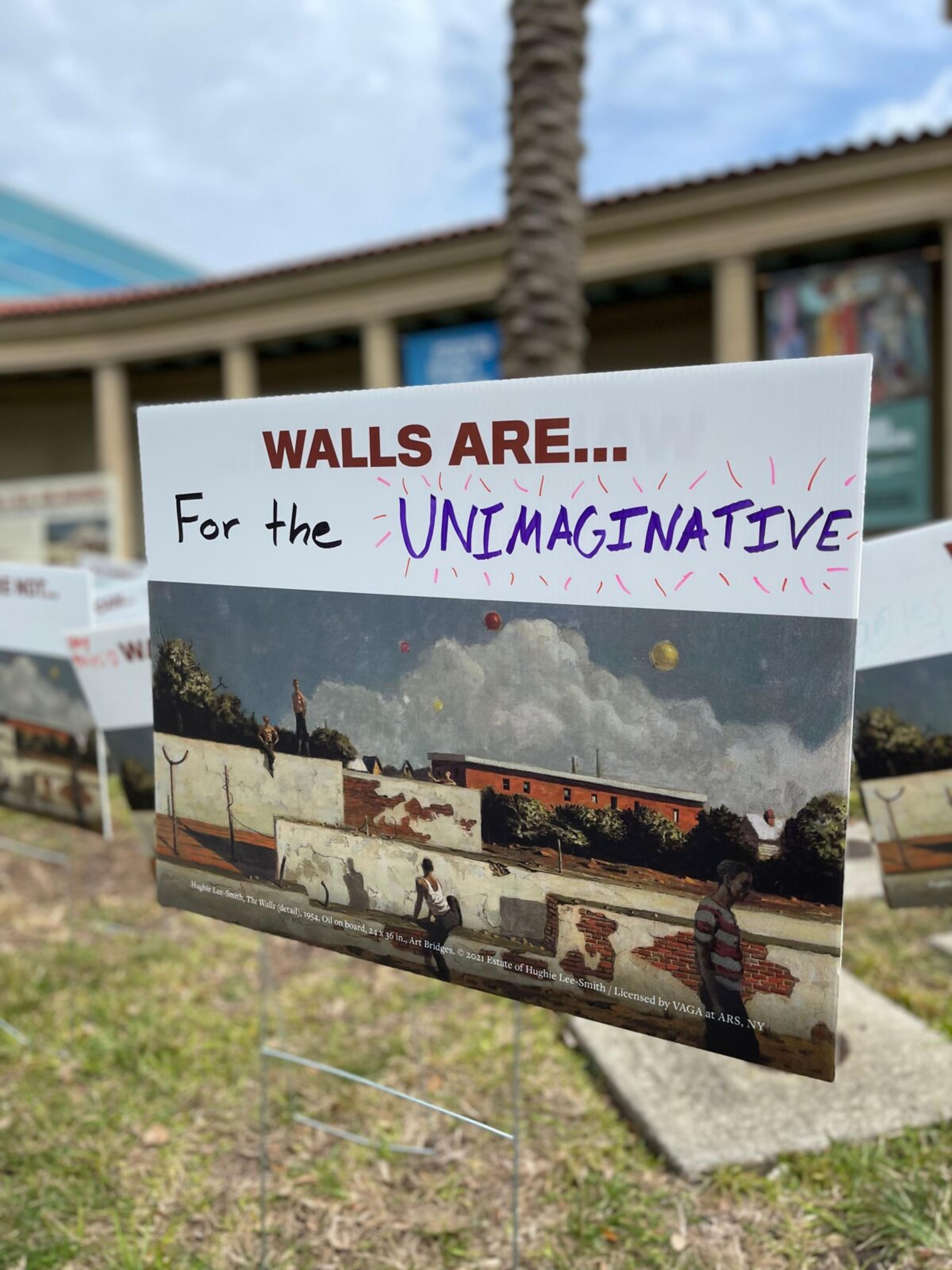
The barren landscape, crumbling walls, and tangles of wire in Hughie Lee-Smith’s The Walls (1954) convey the intense feelings of alienation and anxiety that oppressed Americans during the 1950s in the wake of World War II and the threat of atomic destruction at the advent of the Cold War. These difficult conditions also describe Detroit’s decaying buildings, where the artist lived alongside many African Americans who were forced into such housing by the nation’s long history of economic and social discrimination. The distance and physical barriers that separate the figures in the composition are symbolic of social tensions. White male figures assume heroic poses atop the highest wall, signaling their dominance in a racially divided system. The central figure begins climbing walls that symbolize racism, while the isolation of the figure at the far right reflects Lee-Smith’s own feelings of alienation as a Black artist. Colorful balloons drift skyward, evincing a sense of childlike innocence and symbolizing a vivid, albeit fragile promise of hope.
Hughie Lee Smith
24 × 36 in. (61 × 91.4 cm) Framed: 33 5/8 in. × 45 3/4 in. × 2 in.
Hughie Lee-Smith (1915-1999), "The Walls", 1954, oil on board, 24 x 36 in. Art Bridges.
1954
Oil on board
AB.2017.18
u.r.: Lee-Smith / '54
verso: [inscription]
Artist; given to Friedal Hopkes, president of Detroit Artists Market, 1958; (DuMouchelles, Detroit, MI), lot 2009, April 1999; purchased by Manoogian Collection, Taylor, MI; to Jonathan Boos, Bloomfield Village, MI, 2003; purchased by Art Bridges, TX, 2017
Through its partnership with Art Bridges, the , in Tampa Bay, Florida sought to engage local and diverse communities by highlighting artworks by artists who have been historically underrepresented in museums. By borrowing five paintings from the Art Bridges collection, the MFA St. Petersburg aimed to expand upon traditional art historical narratives and deepen conversations on race, gender, and regional identity by featuring works by BIPOC, LGBTQ+, and women artists.